
Jackie Morris: Lost Spells and the keys to the tower
Illustrator Jackie Morris on finding magic at Beckford’s Tower, and returning to Bath to rekindle Lost Spells in a familiar landscape.
Years ago, when I was young, I lived in Bath - in a farmhouse cottage on the edge of the city. I had moved back there after a stint in London, where I’d thought I needed to live after finishing college at Bath Academy of Art. It was where all the publishing houses seemed to be, and I wanted to illustrate, was hungry to work.
Some people are meant to live in big cities, others are not suited to city life, and though I loved the galleries and museums, bookshops and green spaces, and wonderful diversity of humans, I ran back to the relative quiet of life on the edge of the smaller city. This was one of the things I loved about Bath; you can stand in the middle and see the edges.
I loved to walk even then. It was my way of working, to take an idea out for a walk and find the answers to questions raised from commissions, for magazines and newspapers. I would walk up through the fields, early morning, as badgers headed home to their setts and foxes sought cover, up to Kelstone Round Hill and then following pathways along the ridges to Beckford’s Tower and then down to the city again and into my studio space.
Thirty-three years later, I found myself returning to Bath. Beautiful honey-stone city, nestled in its curved valley of the river. This time it was for the opening of The Lost Spells exhibition. A lot can happen in 33 years. The Lost Spells is a travelling exhibition of artwork and words from the book, illustrated by me and written by Robert Macfarlane. Victoria Art Gallery had brought the show to Bath, and the Landmark Trust offered me a place to stay for the exhibition opening: Beckford’s Tower. So many times I had walked past, wondered what it was like inside, the view from the top, a place of dreaming. I knew the park and ride was just up the way, so access to Bath would be easy, and really wanted to walk some of those old pathways I remembered.
'Like having the key to a life-sized doll’s house'
On arrival it was like a story book: guess which door leads to the place to stay. There are three doors. Huge. Entering I felt that delight that we can still, if we are lucky, remember from childhood. It was like having the key to a life-sized doll’s house. Comfortable, beautifully decorated, light, and so, so quiet, with birdsong. It’s close to the road but set back, so traffic noise just wasn’t an issue. We threw open the door onto the small garden, rich with life; butterflies and birds. We explored the graveyard, looked over the wall onto the amazing view of Bath, bathed in evening sunlight. There is a place where you can climb out, over the wall and onto the paths, and there across the valley - Kelstone Round Hill, topped with trees.
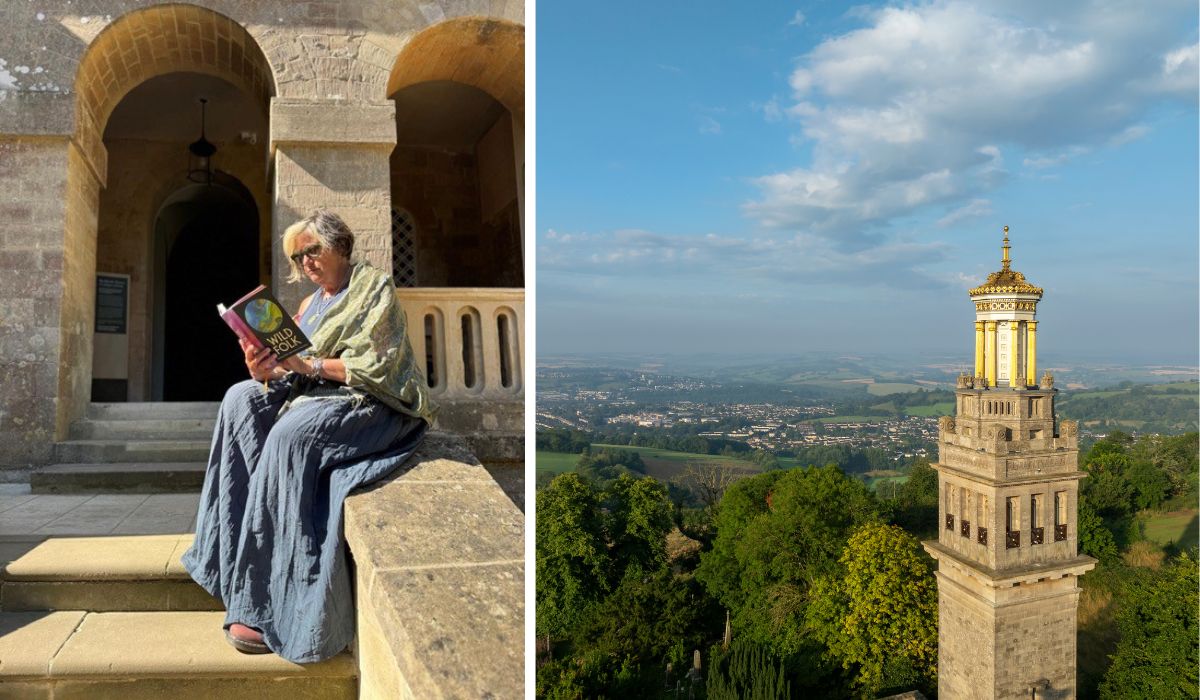
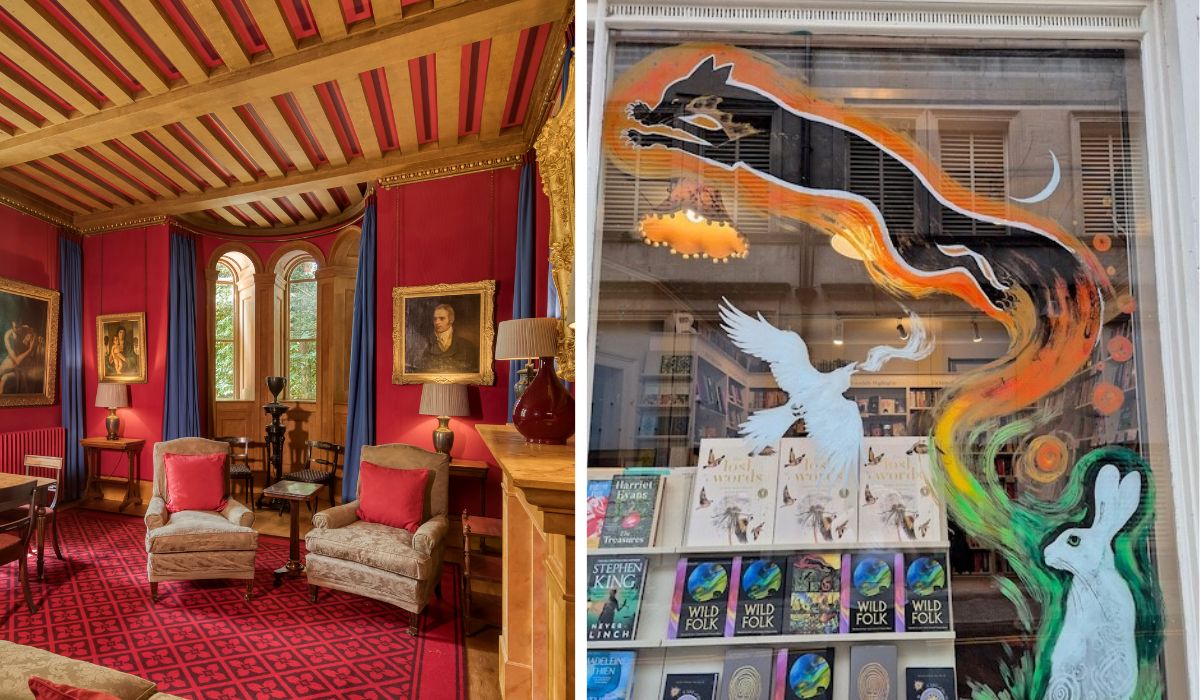
The only problem for me with Landmark Trust houses is that they are so gorgeous I don’t want to go out when I am staying in them. I just want, for that brief time, to inhabit that space. But I had work to do. Around the exhibition opening an event was organised with Mr B’s Emporium of Reading Delights, for Wild Folk - a book written by me with beautiful illustrations by Tamsin Abbott. Tamsin was to spend the day painting the shop window, and in the evening we had a sold out event in a nearby church.
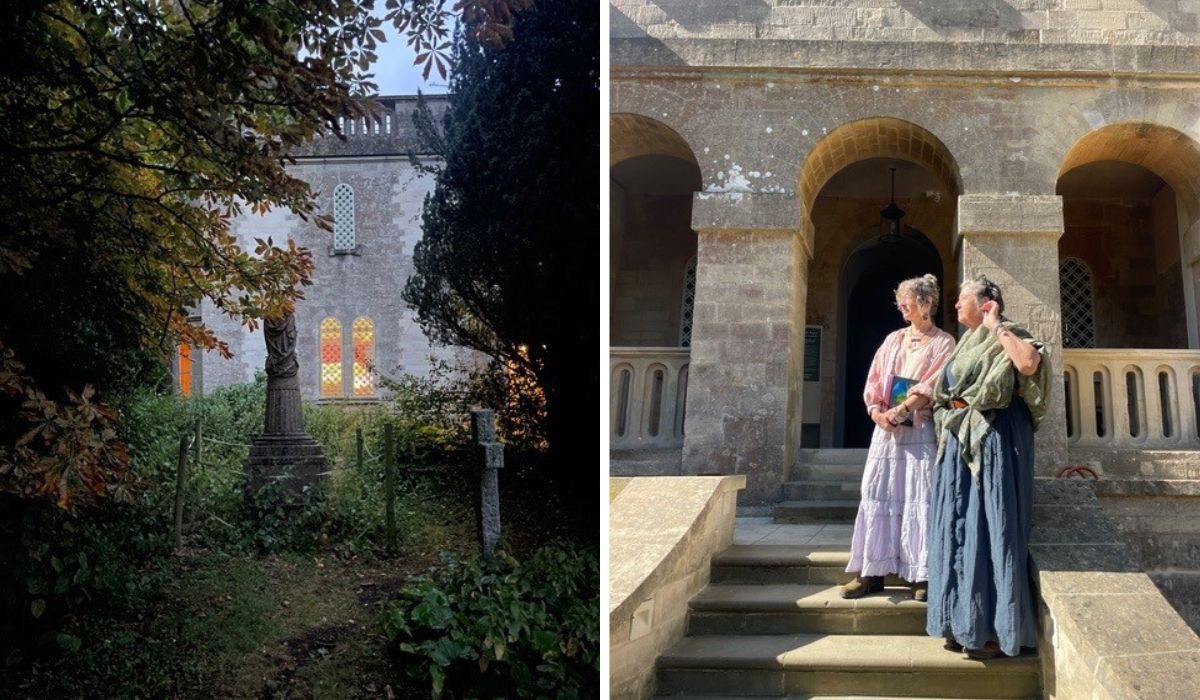
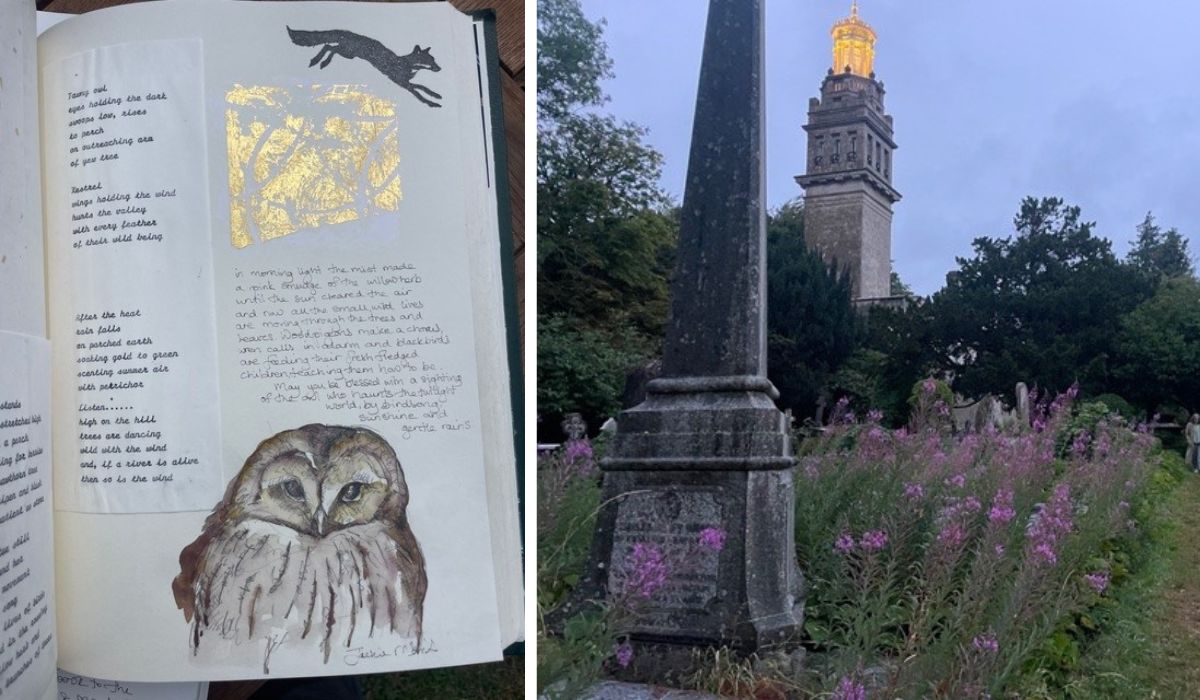
That first evening, watching the light fall out of the day, and the hillside opposite become a city of tiny lights, leaning on the railings, thinking about work the next day, a movement caught my eye. I am always alive to the movement of birds. Swooping low over the graves on silent wings, rising to rest in the outreaching branch of a young yew tree, a tawny owl flew, landed, feet from where I was, and the world stood still. Holding my breath in awe and wonder, as eyes adjusted to the twilight green beneath the bow, our eyes met, and theirs held the liquid dark. Owl shook, then flew off to hunt. So close. So beautiful. So wild.
The next morning, coffee in the garden. Robin, my partner, came out.
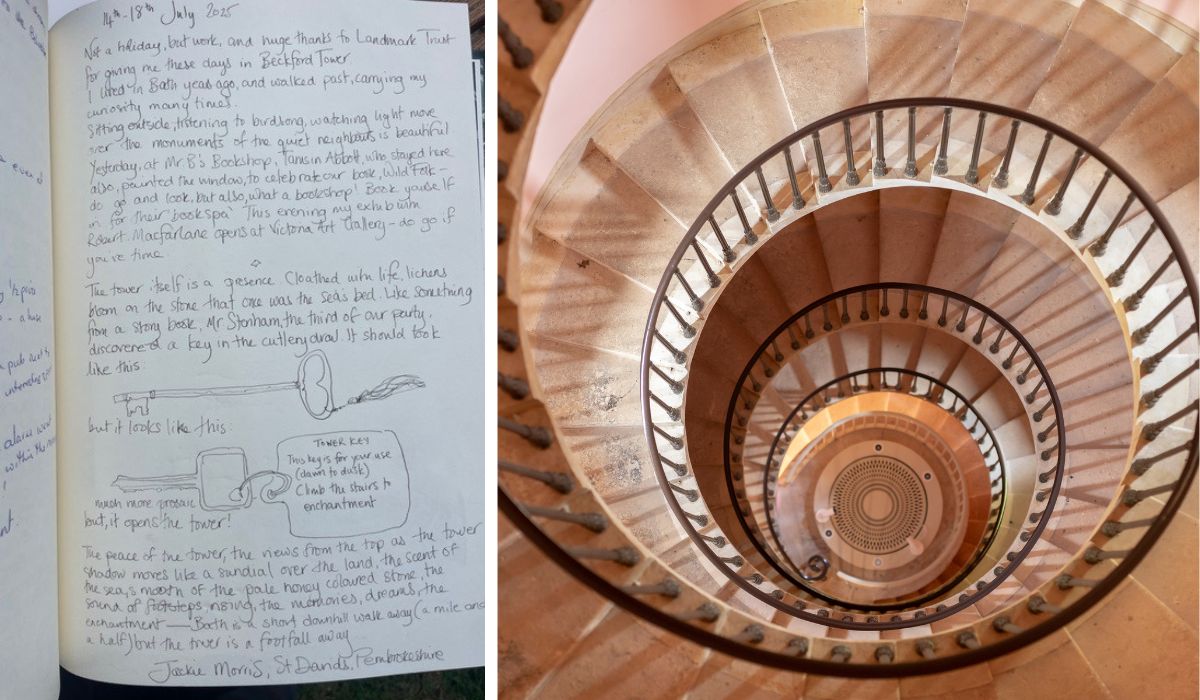
“I’ve found a key,” he said. “In the cutlery drawer. It has a label on it. The label reads ‘this is the key to the tower, for your use between dawn and dusk. Please lock the door behind you, and be sure to lock it when you leave’.”
Three doors we had to choose from on arrival. The left is the door for the apartment. The middle is the door for the museum. The right- is the door for the tower. Wow. The key to the tower.
A busy day, no time to explore, off we went, into town. The exhibition was up, looking amazing under the direction of Nathalie Levi and the team at Victoria Gallery. The shop was full of books, Spellsongs music, posters and prints. Busy, busy day, Tamsin painting the bookshop window, people already buying prints and books, and the promise of the tower key to return home to.
'There are times when you don’t want to return to earth'
Back at the tower the next morning we took the key, and still in our pyjamas, and not quite believing, put the key in the lock. It turned, and the huge door pushed open. Inside was the scent of the sea from the limestone steps rising to the sky. Up we went, up and up, step by step, curling around like being inside an enormous seashell, to the top where the windows look out onto the world. Like something from a story I might have written. Being inside the tower, inside the story, inside a seashell, high like a bird. Magic, awe, and wonder. There are times when you don’t want to return to earth.
There’s no escaping the fact that Beckford’s Tower was built with money made from cruelty and exploitation. The museum and the logbook inside the tower tell the story of Beckford’s strange and privileged life. Sugar money, inherited from parents. Slavery. It’s not pretty. The connections with Wild Folk were not lost on me, either. In the story of The Black Fox, the young man in the story could so easily have been Beckford. Entitled, born into wealth and privilege, shaped by his own circumstances. It is to the credit of Landmark that they are very open about the dark history of the place. And for us, now, it was a quiet harbour in a busy time.
The whole experience of being in Bath was strange, wonderful, exciting. The team at the gallery had made such a wonderful job of curating and hanging the exhibition, but what I wasn’t prepared for was how the city was dressed. It was as if my once hometown had put the flags out to welcome me back. There were banners in the street, huge posters at the park and ride, buses dressed in my paintings, and taxis. Amazing!
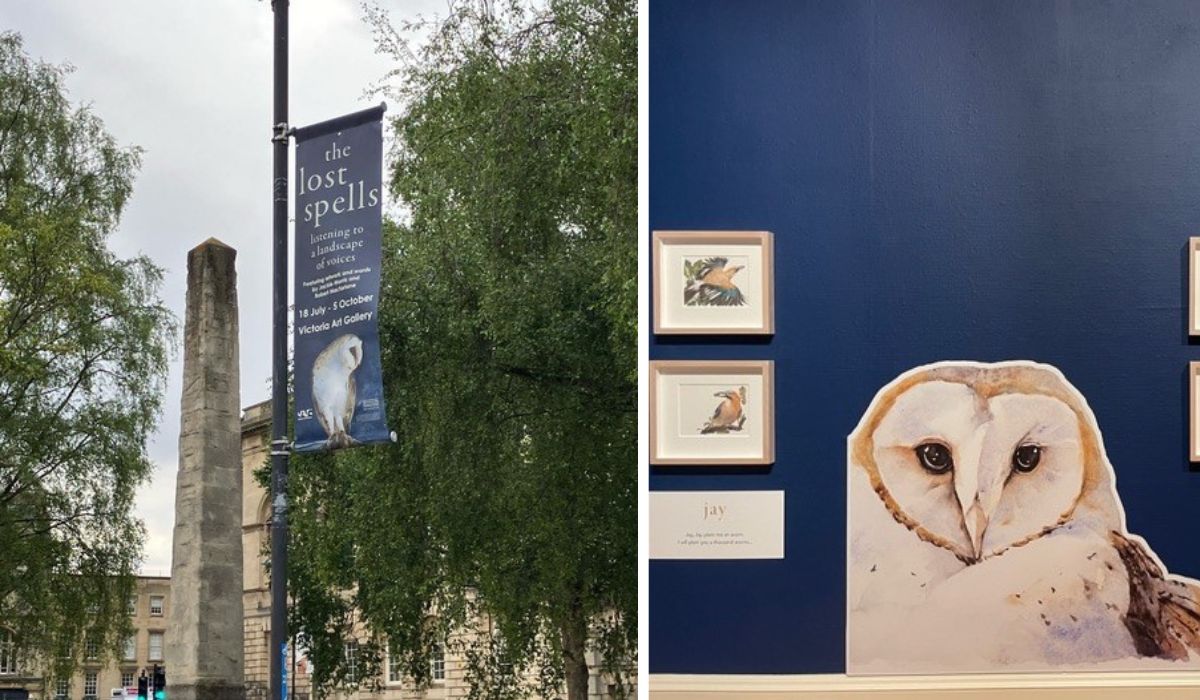
The exhibition at Victoria Gallery runs until the first week of October, and the gallery is a wonderful place to visit, (read the recommendations in the Landmark visitor’s books for more endorsements of the collection). If you can, stay in one of the Landmark Trust’s Bath properties: Elton House, Marshal Wade's House or this, Beckford's Tower.
We so loved staying in the tower. I will never forget that connection with the tawny owl, spirit of the graveyard, in the twilight of dusk while the bats flew. Just beautiful.
Jackie Morris is a British artist, writer and illustrator, living in Wales. She won the Kate Greenaway Medal in 2019 for her illustration of The Lost Words created with Robert Macfarlane.


