

Fit for a King? Dan Jones on Medieval Dover's reawakening
Historian Dan Jones returns to the Kent coast to explore two recently revived medieval sites: Maison Dieu, in which our newest Landmark the Mayor's Parlour can be found; and Dover Castle.
In 1179 King Louis VII of France sailed to England and landed at Dover, on the coast of Kent. This was quite a big deal. French kings very seldom crossed the Channel, or at least not with friendly intentions. But Louis’ need was urgent. His son, Philip, was very sick, and Louis wished to beg the help of the hottest saint in Europe: Thomas Becket, whose shrine was a few hours’ ride away at Canterbury.
Hearing that Louis was arriving, the English king Henry II scampered to Dover to meet him. Which was rather embarrassing.
For one thing, it was Henry who’d given the accidental-fateful orders which had resulted in Becket’s martyrdom nine years earlier.
For another, Dover was a bit of a dump. The white cliffs that still face arrivals to the southeast coast of England today were as magnificent then as they ever have been. But there was not much else in town that was fit for receiving a fellow king.
Henry II was notorious for keeping a kick-bollock-scramble type court: a monarchical caravan, constantly on the move, where the wine served was so bad one had to filter it through one’s teeth.
Even so, one didn’t want to be shown up. Which is probably why, almost as soon as Louis VII’s impromptu state visit was over, Henry II began pumping money into a full overhaul of Dover Castle. In doing so, he created the core of the iconic castle that still sits on the clifftop, overlooking Dover harbour, where huge ferries honk as they chug in and out of port, and where, this week, I spent a couple of days remembering what a fantastic part of the world this is.
Dover Castle
It’s eleven years since I’d been to Dover, making episodes of Britain’s Bloodiest Dynasty and Secrets of Great British Castles. Looking back on it now, that was an amazing summer. I spent nearly three months on the road, filming ten episodes of TV, and seeing a lot of incredible buildings.
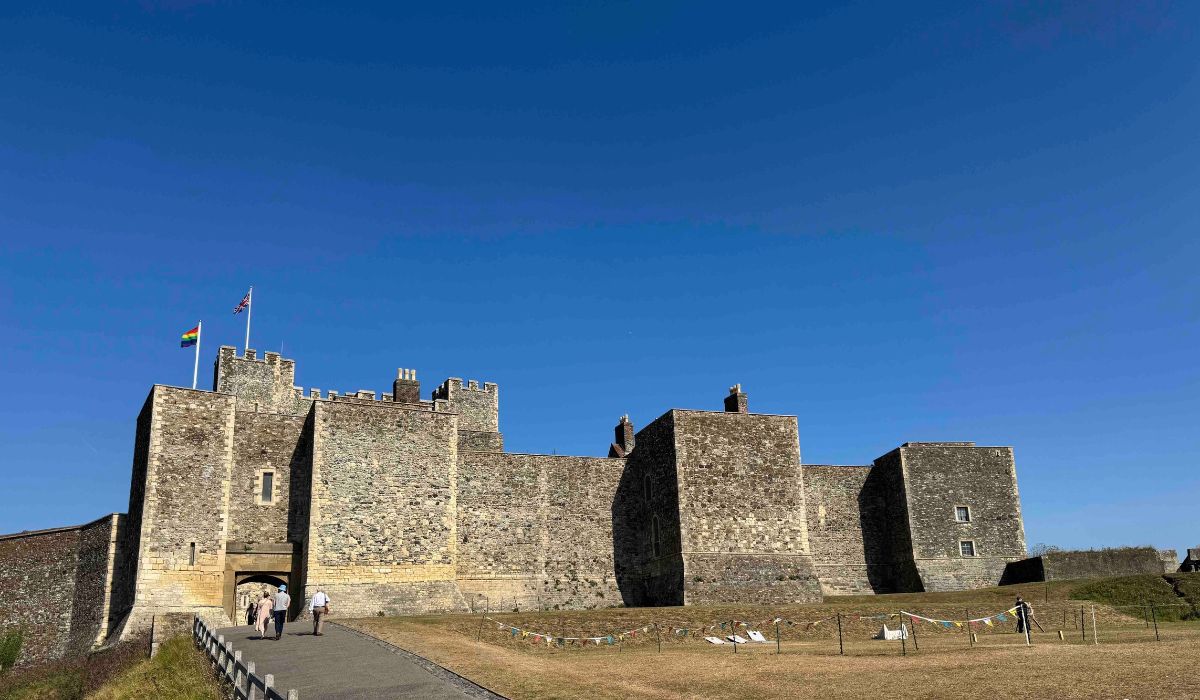
Dover Castle. Photo: Dan Jones
Dover, however, sticks in my mind. The castle, in which we filmed for both series, struck me then as the most magnificent I’d ever visited. Its history is surprisingly ancient, and surprisingly modern: at one extreme there’s the only Roman lighthouse in the UK, dating to the 2nd century AD; at the other is the Cold War bunker dug deep into the cliffside, which you can only visit by special appointment during the winter months.
And in the middle, as it were, lies Henry II’s fortress, built to serve England’s need for something truly spectacular glowering from the clifftops, serving as the first glimpse of Plantagenet power anyone sailing the short route from France might get.
In the time since I’d last visited Dover, the apartments within the medieval Great Tower have been given a makeover: you can now get a feel for a king’s bedroom, a royal nursery, and a smokehouse, full of all the haunches of venison a hunt-addicted king would have brought home.
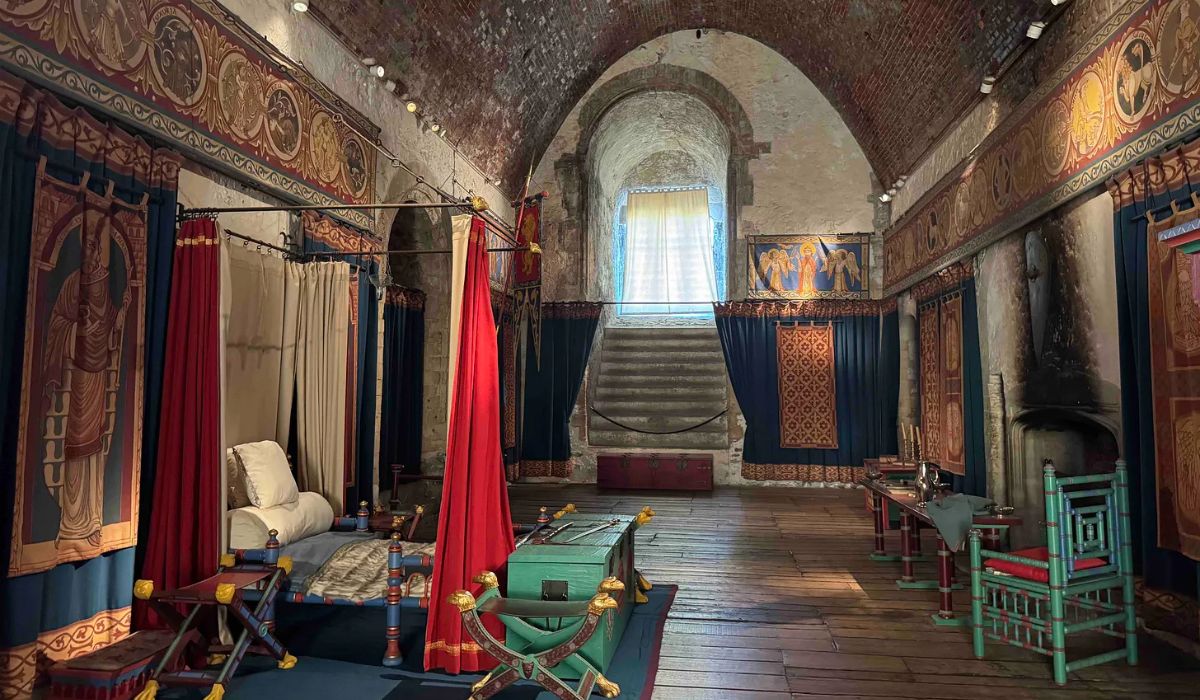
Dover Castle. Photo: Dan Jones
The route around the Great Tower leads to the roof, where you have one of the finest views of Dover’s sheltered bay, as well as the green countryside of Kent stretching away to the horizon. And that is all quite besides the other popular bits of Dover Castle - the wartime tunnels which played a crucial role in commanding the Dunkirk evacuations in 1940.
When we made the Secrets of Great British Castles episode, I found this part of Dover’s history was particularly affecting, as we visited the beaches at Dunkirk with a veteran named Vic Viner, who described the scene on those dreadful days to me as we stood on the sands. It was an experience I hope I never forget.
Now, there is another important way that Dover has had a glow-up since my last visit: the accommodation available in town.
When we were filming Bloodiest Dynasty we stayed in a rather sorry establishment on the edge of town, mostly served by weary truckers overnighting before they took their cargo lorries across to the continent. I recall scratchy pillows, down-at-heel rooms and, as bad luck would have it, a 3am fire alarm, which had our whole crew standing shivering in the car park in our bedclothes or underwear.
A decade on things were a lot nicer - and, in a way, more medieval.
The revival of Maison Dieu
Earlier this year I had been tipped off by my friends at The Landmark Trust that they were about to open a new property in the middle of Dover, within the huge medieval building known as the Maison Dieu.
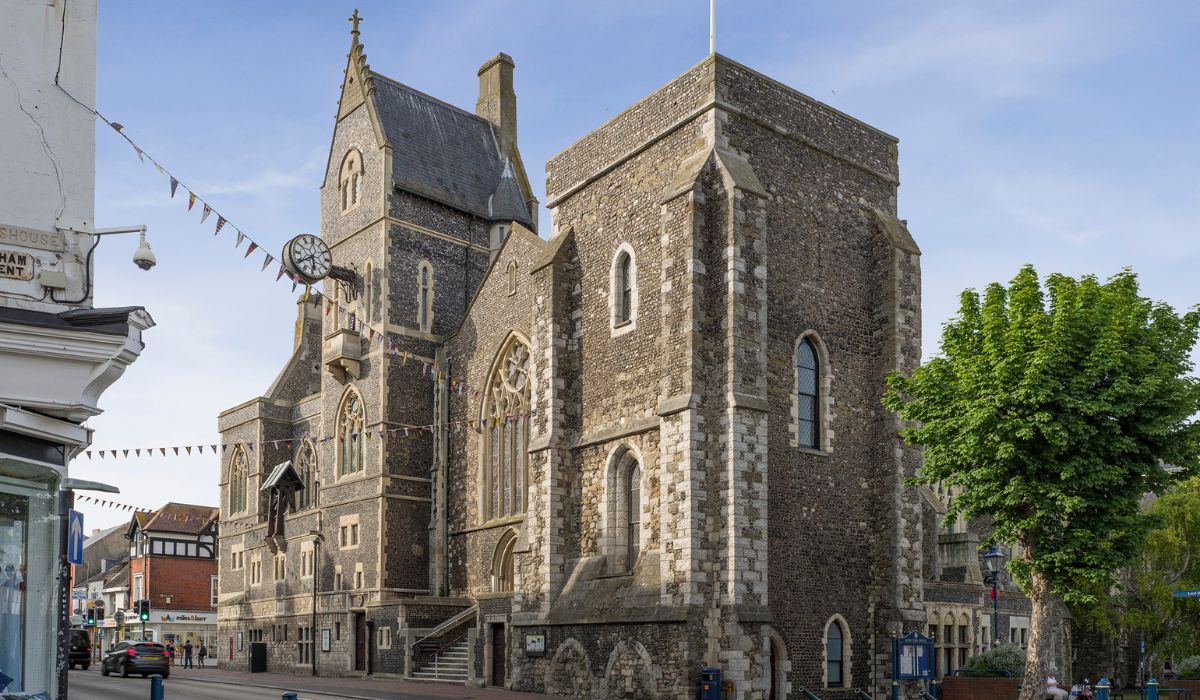
The Maison Dieu, Dover
This grand thirteenth-century building was originally founded as a lodging place for pilgrims coming - just as Louis VII once did - from the continent to visit Becket’s shrine at Canterbury. Several Plantagenet kings visited it, including Henry III, who came along to see the chapel consecrated, and Richard II, who popped in on his way to Calais when he was married for the second time in 1396.
During the nineteenth century the Maison Dieu was bought by the Corporation of Dover, who repurposed it as the Town Hall - as well as a courthouse and, briefly, a prison. In the late nineteenth century, it underwent a refurbishment, and in the course of this, a suite of rooms known as the Mayor’s Parlour was built.
The design and decoration of Mayor’s Parlour was the vision of William Burges - among the very greatest of the late Victorian architect-artists. (Castle botherers will know his work from the dazzling interiors at Cardiff Castle and the nearby Castell Coch.)
Burges took heavy aesthetic inspiration from the Middle Ages - and in the Mayor’s Parlour, as in Cardiff Castle and elsewhere, he allowed his medievalism to run wild. His rooms, designed for the mayor to hold meetings, don official robes and attend to the business of local government, were gleaming, glittering places, beautifully proportioned and decorated with gilt ceilings and parades of grotesque animals and heraldic beasts which seem to have leapt from the pages of an illuminated chronicle.
Burges died young-ish, before his work was complete, but he left enough for his colleagues to go on, and for a time, the Mayor’s Parlour was a fitting tribute to Dover’s medieval past.
Over the years, Burges’ work went out of fashion, and in Dover the Maison Dieu shed many of its civic purposes - no more court, no more town governance. So by the early twenty-first century, the Mayor’s Parlour was not what it once was. But in 2020 the district council raised more than £10m for a full restoration of the Maison Dieu.
As part of that, the Mayor’s Parlour was redeveloped by The Landmark Trust. And in 2025, the whole place reopened. In the Mayor’s Parlour, what was once the board-room is now a dining room (with the original table and chairs); the mayor’s retiring room has been converted into a kitchen; council offices above have been turned into bedrooms not a world away from the royal bedrooms in Dover Castle.
 Inside the Mayor's Parlour
Brilliantly - in every sense of that word - Burges’ designs have been recreated - and they are just glorious.
This bird of prey, from the dining room, is particularly Henry II - while the butterflies feel like they have just fluttered from the margins of a Matthew Paris manuscript.
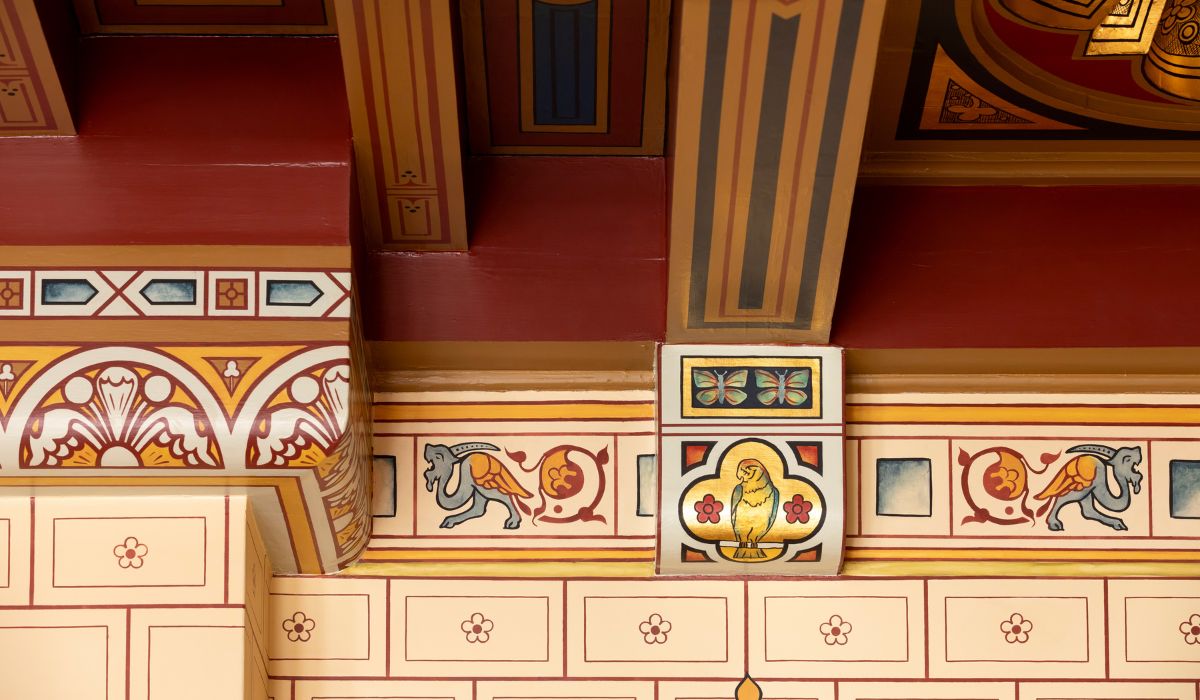
I also love the flourishes that suggest saints’ shrines and - you can just about see them here - the daisies that decorate the kitchen.
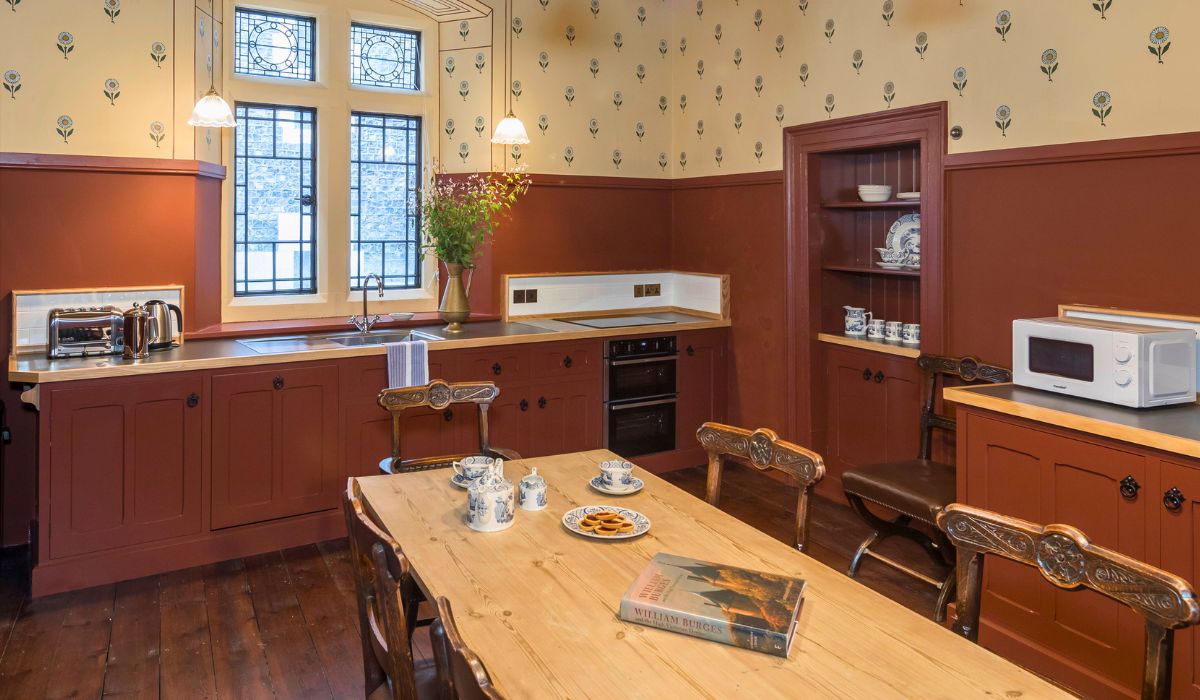
The ceilings aren’t bad either:
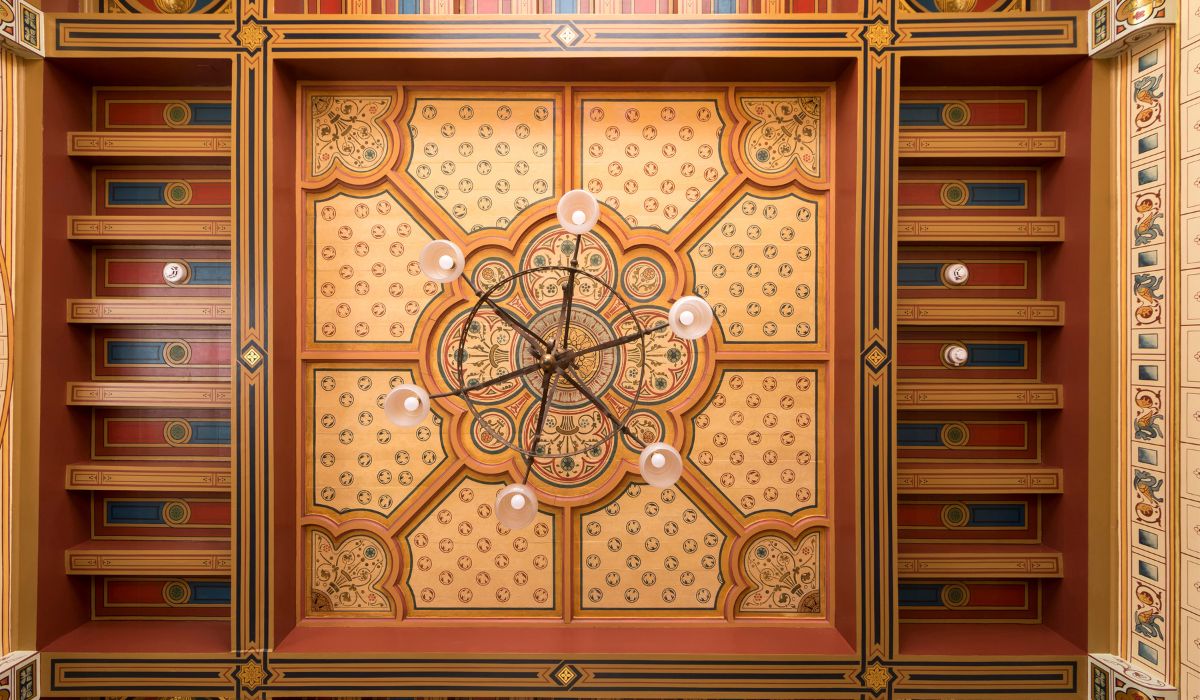
This sort of thing was all the rage in the late nineteenth century, when the Middle Ages were reimagined as a sort of soft-focus dreamscape. Burges did it better than almost anybody.
Today we have a harsher, bleaker, nastier view of the medieval world: Game of Thrones has plenty to answer for on that score, and I suppose Essex Dogs does as well.
But there are still some great examples of this utopian medievalism about to be enjoyed. The Houses of Parliament is probably the greatest example - Pugin and Barry memorialised a very particular sort of medievalism with such force that I suppose many visitors don’t realise the original palace of Westminster burned down at all. Cardiff Castle is another.
And here, in miniature, is Burges’ reborn Mayor’s Parlour in Dover - a fitting place to revive a reimagination of the medieval world, in the town which was once the first stopping point for all foreign visitors to the Plantagenet kingdom.
Dan Jones is a historian, novelist, television presenter and journalist.


